.png)
What is the EMMETT Technique (for animals)?
In simple terms
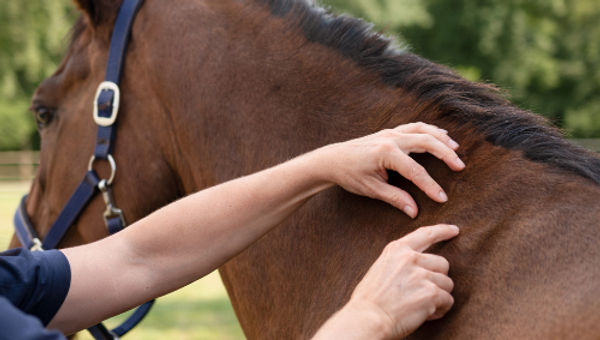
The EMMETT Technique is a hands-on approach that uses light finger pressure on specific points of the body to encourage changes in muscle tension and comfort.
The touch is precise but gentle, often applied for short periods, with the intention of prompting the body to respond and adjust. It is typically calm, non-forceful, and adapted to the individual animal.
EMMETT Technique is used as a supportive, complementary approach, not as a medical or diagnostic treatment.
In the UK, it should be practised within appropriate professional scope and, where required, under veterinary referral.
How it’s used with animals
EMMETT Technique sessions are typically designed to:
support comfort and ease of movement
encourage muscle relaxation
be gentle and minimally intrusive
be responsive to the animal’s reactions
allow pauses for the body to integrate
Sessions are often brief, with practitioners observing posture, movement, and behavioural cues before and after specific points are applied.
The technique may be used on its own or alongside other supportive or veterinary-led approaches.
What animals it’s appropriate for
When provided by a suitably trained practitioner, the EMMETT Technique may be appropriate for:
Dogs
Horses & equines
Other domesticated animals, depending on practitioner experience
Suitability depends on the animal’s health, temperament, and tolerance for gentle hands-on work.
What animals it’s not appropriate for
The EMMETT Technique may not be appropriate for:
animals in acute medical crisis or emergency
animals with injuries or conditions where hands-on contact is contraindicated
animals who find touch distressing
situations requiring diagnosis or clinical intervention
In these cases, veterinary care should always be prioritised.
What people often seek it for
People explore the EMMETT Technique for animals for supportive reasons including:
supporting comfort and mobility
helping animals settle physically
supporting older animals
complementing training or performance work
encouraging relaxation and body awareness
For many guardians, the appeal lies in the subtle, responsive nature of the approach.
What it’s not
The EMMETT Technique is not:
a substitute for veterinary diagnosis or treatment
a medical or surgical intervention
a forceful manipulation
a guaranteed solution or cure
Ethical practice prioritises sensitivity, consent, and clear professional boundaries.
Things to consider
When exploring the EMMETT Technique for an animal, it’s helpful to:
choose practitioners trained specifically in animal EMMETT Technique
ask how sessions are adapted for different species
be cautious of medical claims or guarantees
ensure the technique complements appropriate veterinary care
observe how your animal responds during and after sessions
Practitioners must work within legal and professional scope in the UK.
How to explore this safely
If you’re curious about the EMMETT Technique:
begin with a conversation about your animal’s history and needs
allow sessions to remain flexible and animal-led
watch for signs of relaxation or discomfort
stop sessions if avoidance or stress is observed
treat the technique as part of a wider care picture
For many animals, the EMMETT Technique becomes a quiet, supportive addition to their wellbeing routine rather than a solution-focused intervention.
Practitioners offering the EMMETT Technique for animals may be listed in our directory. Practitioners are responsible for clearly describing their training, experience, and scope of practice.
Important notice
Alternative Pet Health Scotland does not verify or accredit individual qualifications and holds no responsibility for the experience or capability of any person or business listed in this directory.
This information is provided for educational purposes only and is not a substitute for professional veterinary advice. Always make choices appropriate to your animal and circumstances.